Articles
She Turned a $50 Dinner Into the World's Most Powerful Marketing Event. No One Saw It Coming. That Was the Point.
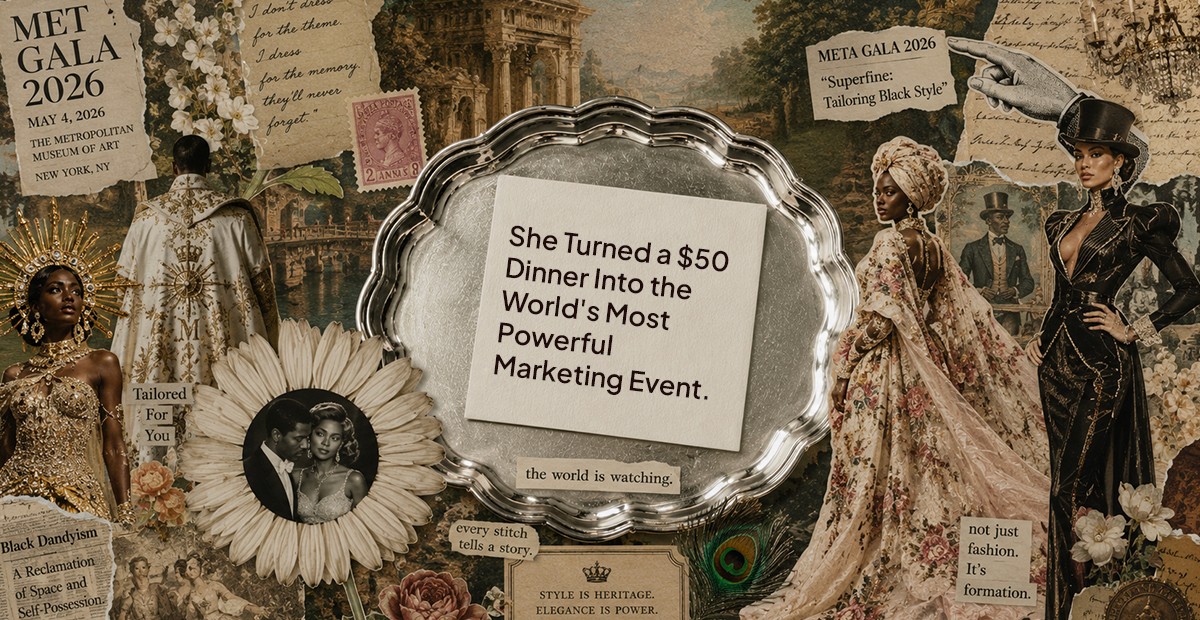
The best business moves don't look like business moves. They look like culture.
Let's start with the audacity of it.
It is 1948. The Metropolitan Museum of Art's Costume Institute is underfunded, overlooked, and quietly desperate. A publicist named Eleanor Lambert throws a dinner. Tickets are fifty dollars. It raises enough to keep the lights on. Simple. Functional. Forgettable.
Now fast-forward to today.
A single ticket costs $100,000. A table runs over a million dollars. The event generates $1.4 billion in brand marketing value in a single night — more than twice what the Super Bowl produces. The world's most powerful people compete, sometimes ruthlessly, for an invitation. And the entire planet watches on social media, unable to look away, every single first Monday of May.
Fifty dollars to $100,000.
That is not inflation. That is one of the greatest organisational masterstrokes in the history of modern culture. Someone looked at a modest dinner for the arts and saw — with extraordinary clarity and years in advance of anyone else — exactly what it could become.
This is that story. And inside it is the most important lesson any brand builder alive can learn.
Act One: The Blueprint — What Eleanor Lambert Actually Invented
Eleanor Lambert did not just throw a party. She invented a template.
The template was deceptively simple: take something worthy, make it glamorous, charge for access, and use the glamour to fund the worthy thing.
This is not unusual. Benefits, galas, and fundraising dinners have existed for centuries. What Lambert understood — and what made the Met Gala different from every other well-intentioned charity dinner — was the specific combination of fashion, art, and social aspiration as the engine.
Fashion, she understood, was not frivolous. It was the most democratic and most powerful art form in the world — the only one that every human being on earth participated in every day of their lives, whether they knew it or not. Anchoring a cultural fundraiser to fashion was not a choice to be popular. It was a choice to be universal.
The template she built in 1948 was robust enough to survive for decades on quiet competence. But it needed something else. It needed someone who could see not just what it was, but what it could be — if someone were bold enough to redesign it from the inside out.
Act Two: Anna Wintour and the Architecture of Desire
In 1995, Anna Wintour took over as lead chairperson of the Met Gala benefit committee. What happened next was not an evolution. It was an architectural reinvention.
Wintour, the editor-in-chief of Vogue and arguably the most influential single person in the global fashion industry, did not simply bring her contacts and her credibility to a charity dinner. She brought her entire worldview about how desire works.
And her worldview was this: people do not want what they have. They want what they cannot have. And the job of culture is to manufacture the distance between the two.
Here is what she changed, and why each change was a masterstroke.
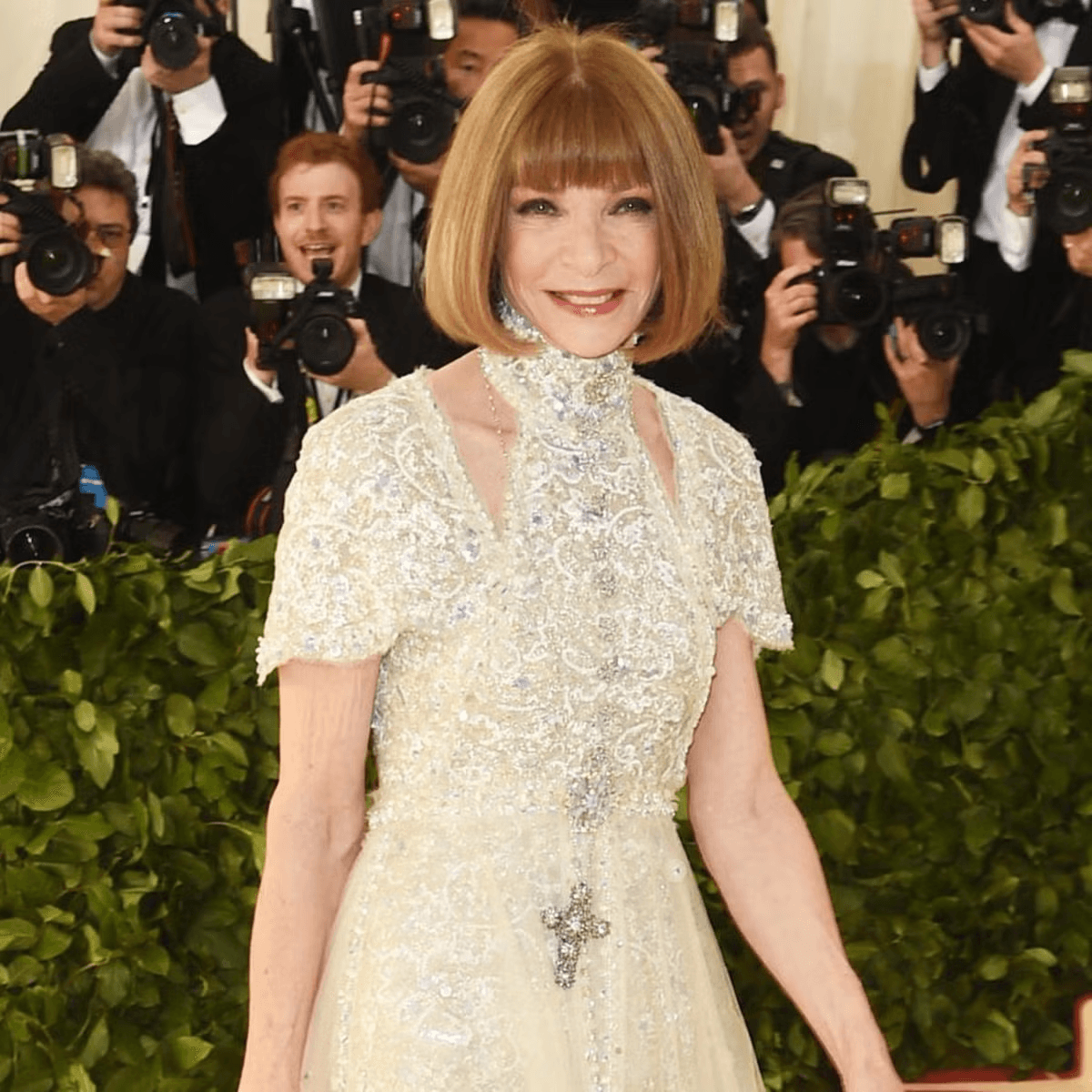
source : the independent
She introduced the annual theme. Every year, the Gala would be built around the Costume Institute's current exhibition — a conceptual framework that attendees were invited (but not required) to interpret through their clothing. This single decision transformed the event from a party into a discourse. Suddenly, getting dressed for the Met Gala was not vanity. It was a creative brief. It was an argument. It was cultural commentary in fabric. The world didn't just watch the outfits. It decoded them. And decoding, as any media strategist knows, generates far more engagement than passive observation.
She made the guest list a secret. Until close to the event, the invitees remain unknown. This manufactured information gap produces weeks of anticipation, speculation, and conversation — all of it free media for the event, all of it happening before a single camera is turned on. The guest list is not just a list. It is an annual mystery novel that the entire internet tries to solve.
She tightened the room. 400 to 450 guests. That's it. In a world of eight billion people. Wintour understood that exclusivity is not about who is in the room. It is about how many people are desperate to be in the room and cannot be. The smaller and more curated the attendance, the larger the desire of the excluded. The velvet rope is not a door policy. It is a desire-manufacturing machine.
She invited the cameras. The red carpet — the walk from the car to the museum entrance — became the event's most watched moment. Not the dinner inside. Not the exhibition. The walk. Thirty seconds of public appearance, photographed by every major outlet on earth and shared across billions of social posts. By making the entrance the spectacle, Wintour gave every brand, every designer, every celebrity something they desperately wanted: a globally televised product launch dressed as a personal fashion choice.
That last move is the one that changed everything.
Act Three: The Genius of the Value Exchange
Here is the mechanism that makes the Met Gala the most brilliant event in the world. And it is worth understanding in precise detail because it is directly replicable by any brand, at any scale, in any category.
The Met Gala does not sell advertising. It does not sell sponsorship in the traditional sense — a logo on a banner, a mention in a programme. What it sells is something far more valuable and far less tangible:
It sells association.
When Louis Vuitton sponsors the event, dresses Zendaya, Lisa, Sabrina Carpenter, and Doechii in custom looks, and watches the world photograph and discuss those looks for seven consecutive days, Louis Vuitton is not buying ad space. It is buying cultural context. It is saying, through the grammar of presence rather than the grammar of promotion: we are where the most interesting things happen. We dress the most interesting people. We are the visual language of this moment.
That is worth more than any advertisement. Because advertisements are always, obviously, advertisements. Presence is different. Presence looks like belonging.
And belonging, as every luxury brand in the world understands, is the one thing that cannot be faked, manufactured in a studio, or delivered by a media buy. It has to be earned. Or — and this is Wintour's masterstroke — it has to be staged so brilliantly that it is indistinguishable from earned.
The value exchange that Wintour engineered looks like this from the outside:
The brand pays for a table (funds the museum)
The brand sends celebrities dressed in their product (the red carpet moment)
The world watches and generates billions in organic coverage (the return)
The museum gets funded and the cultural institution thrives (the legitimacy)
Everyone wins. The charity is real. The value is real. The museum is funded. The Costume Institute preserves extraordinary work. And the brand gets something it could not have bought through any conventional channel: the feeling of being part of something rather than adjacent to it.
That is the architecture. And it is, when you sit with it, genuinely beautiful in its construction.
Act Four: The Numbers That Prove the Genius
The business results of Wintour's redesign are staggering in ways that even sympathetic observers understate.
In 2013 — eighteen years into Wintour's tenure — the Met Gala raised $9 million for the Costume Institute. A headline-grabbing figure for an arts fundraiser. In 2026, it raised $42 million. Nearly five times more. In thirteen years.
But the fundraising figure is almost beside the point when you look at the broader numbers:
$1.4 billion in Media Impact Value for brands in 2024. In one night.
$1.3 billion in MIV in just the first 48 hours after the 2025 event — a 19% increase year on year.
$552 million in Earned Media Value from Instagram alone in 2025.
8.5% average engagement rate on branded content — in an era where 2% is considered strong.
2.1 billion video views in the seven days following the 2024 event. A 73% year-on-year increase.
More brand value than the Super Bowl ads. Generated not by a sports league with a century of institutional infrastructure, but by a museum fundraiser that started with a $50 dinner and one woman's clarity of vision.
And critically — the numbers compound. Every year, the event generates more value than the year before. Because Wintour built not just an event but a flywheel. Each year's cultural impact increases next year's desirability. Each year's desirability justifies higher ticket prices. Higher ticket prices increase the exclusivity. Increased exclusivity drives higher coverage. Higher coverage drives more brand demand. More brand demand funds better events. Better events generate more impact.
She did not build a party. She built a perpetual motion machine for cultural capital.
Act Five: The Psychological Architecture — Why the World Cannot Look Away
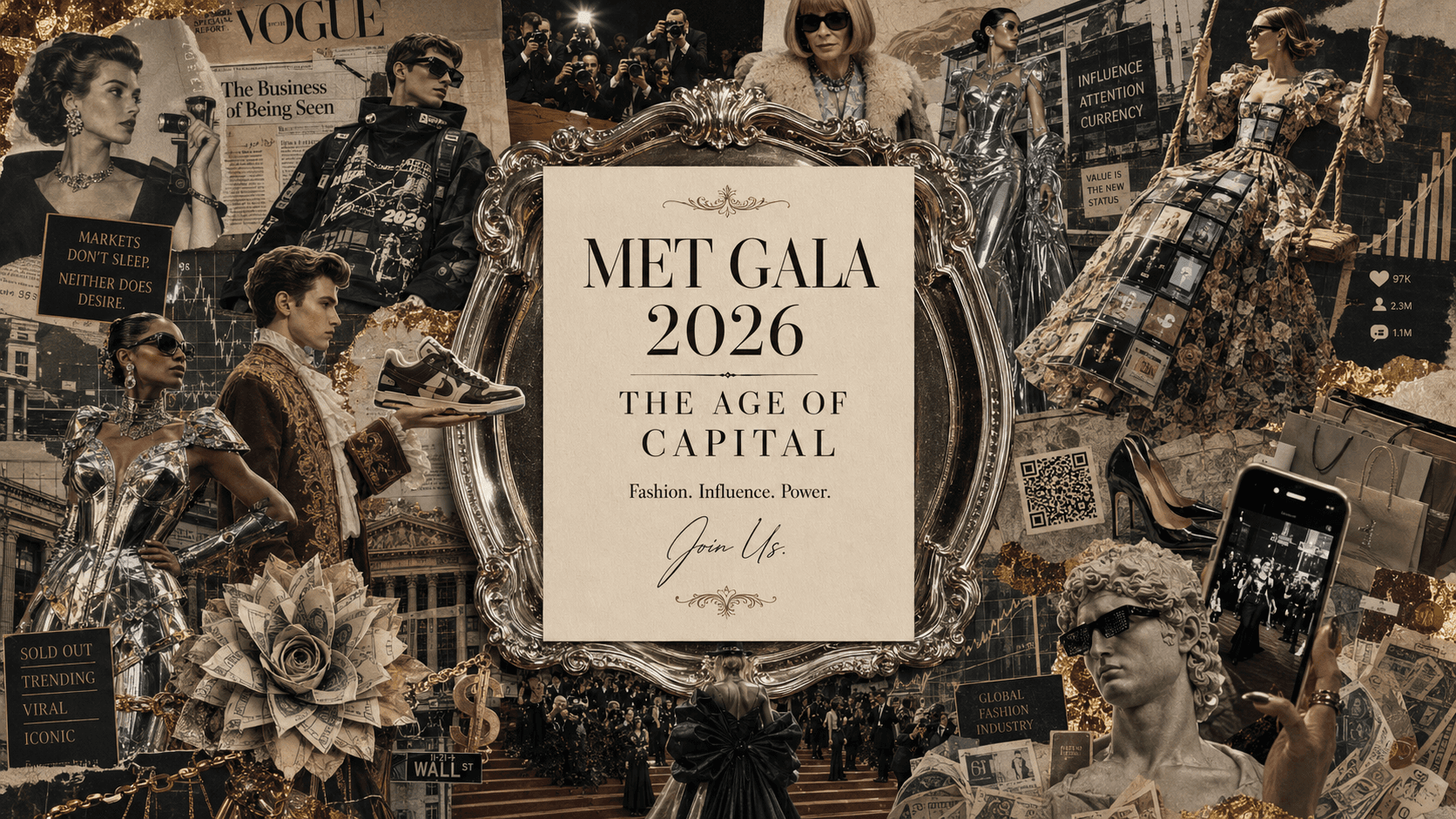
Understanding why the Met Gala has the hold it does on global attention requires going deeper than "it's glamorous" or "famous people look nice."
The event's psychological power is structural. It is built on mechanisms that are not accidental — they are designed, whether consciously or through decades of intuitive refinement, to be irresistible.
Scarcity. 650 seats. Out of eight billion people. The mathematics of exclusion are so extreme that they produce something stronger than envy — they produce mythologisation. The Met Gala is not a party that people cannot attend. It is a world that people cannot enter. And worlds, unlike parties, generate obsession.
The annual theme as cultural brief. Each year's theme gives the global audience a framework for engagement. You don't just watch the outfits. You evaluate them against a conceptual standard. You become, for one night, a judge of cultural interpretation. This participatory engagement — "did the look honour the theme?" — transforms passive viewers into active participants. The internet does not watch the Met Gala. It grades the Met Gala. And grading requires investment.
Controlled suspense. The guest list stays secret until the last moment. The outfits are never previewed. Every appearance is a first reveal in real time, globally simultaneous. The Met Gala is the last major event in the world that still operates on genuine surprise — and in an era of leaks, spoilers, and algorithmic prediction, genuine surprise is one of the rarest and most valuable things a cultural event can offer.
The ritual anchor. Every first Monday of May. Without exception. For decades. Rituals derive their power from consistency. The human brain tags recurring events with emotional significance — the Met Gala arrives in the calendar with the same anticipatory charge as a national holiday, not because anyone legislated it, but because it has arrived reliably enough, year after year, to become a temporal landmark. Brands that understand this understand that showing up consistently is not just strategy. It is the building of ritual. And ritual is the deepest form of brand loyalty.
Controversy as fuel. Every year, the Met Gala generates enough division to dominate conversation without generating enough damage to compromise the event. An outfit is too literal. An outfit ignores the theme. A guest list choice is inexplicable. A guest list absence is an insult. In 2024, the event sparked a mass social media protest — #Blockout2024 — where users blocked attending celebrities in frustration at elite excess during a time of global crisis. Did the controversy hurt the Met Gala? The 2025 event grew by 19% in media impact. The controversy became additional coverage. Even the resistance became amplification. That is not luck. That is a system so robustly designed that it converts opposition into energy.
Act Six: The Guest List as the Greatest Product in the World
Let's talk about what the guest list actually is — because it is the most counterintuitive and most brilliant component of the entire system.
The Met Gala's guest list of 400 people is not a list of celebrities. It is a living index of global cultural capital. And it is curated, year after year, with the precision of an art collection.
Wintour and her team do not simply invite famous people. They invite relevant people — a distinction that sounds subtle and is actually everything. Fame is backward-looking. Relevance is present-tense. The person who was the biggest star five years ago is not the same as the person who is generating the most cultural energy right now. The Met Gala tracks the present tense with extraordinary accuracy. That accuracy is itself a form of genius.
The expansion of the guest list in recent years — into K-pop, into sport, into tech, into South Asian and South American and African celebrity — is not tokenism or political gesture. It is strategic geography. Each new constituency brought into the room brings their entire audience to the television, to the phone screen, to the Instagram feed. When Shah Rukh Khan walked the steps in 2025, hundreds of millions of people across South Asia who had never cared about the Met Gala were suddenly watching in real time. That audience — its attention, its engagement, its subsequent media value — was created by a single curation decision.
The guest list is, in the most precise sense, a product. It is designed, manufactured, and delivered to produce a specific outcome: maximum global cultural relevance, maximum media impact, maximum desire from the excluded majority.
And it works so completely that people compete for it, pay fortunes for it, and build years of strategy around it — while experiencing it, entirely, as an honour rather than a transaction.
That is extraordinary product design.
Act Seven: India's Moment — The Masterstroke Recognises the Masterstroke
Here is where the story becomes personal.
India's relationship with the Met Gala was, for a long time, one of peripheral appearances. Priyanka Chopra. Deepika Padukone. Isha Ambani. Meaningful appearances, warmly received, quickly absorbed into the broader spectacle. India was at the party. India was not yet shaping it.
The 2025 Met Gala changed that.
Shah Rukh Khan walked the steps in a look by Sabyasachi Mukherjee that the internet could not stop talking about: a hand-quilted, hand-dyed Murshidabad silk court jacket, a bare chest, a kamarbandh, custom embroidered shoes, and a Bengal Tiger Head Cane crafted in 18k gold with sapphires and old-mine-cut diamonds. The red carpet interviewers did not know who he was. Sabyasachi stepped in and explained that there had nearly been a stampede of fans outside. The world watched a gentle, confident correction of one of Western media's longest-standing blind spots.
Also that night: Kiara Advani in Gaurav Gupta's golden sculptural architecture. Natasha Poonawalla in vintage Parsi gara sarees by Manish Malhotra. Diljit Dosanjh in full Punjabi regalia, making the internet lose its collective mind. India did not just attend the 2025 Met Gala. India arrived at it with the specific kind of authority that comes from having nothing to prove.
What Sabyasachi executed that night was a masterclass in exactly the same logic that Wintour applied to the event itself: use the platform to make an argument that could not be made any other way.
Sabyasachi's own words for the look were explicit. He drew a line from the Black Dandy tradition to India's own noble court traditions, and then — with extraordinary boldness — to Jamsetji Tata, who was denied entry to a colonial hotel in Bombay and responded by building the Taj Mahal Palace Hotel. The look was not fashion. It was a civilisational declaration made in silk and precious stone, delivered on the world's most watched cultural stage, to an audience of billions.
That is what the Met Gala makes possible for brands that are brave enough to use it. Not a product placement. A position statement. Not visibility. A point of view.
Act Eight: The Complete Playbook — How Brands Get In and What They Do When They Arrive
The Met Gala's genius is that it looks exclusive while being — for those who understand its mechanics — entirely accessible. There are four paths in, and they are all replicable.
Buy the table. At $100,000 per seat, a table runs approximately $1 million. The return, measured in Media Impact Value, can be tens or hundreds of millions. Louis Vuitton in 2025 dressed four cultural icons in custom looks — Zendaya, Lisa, Sabrina Carpenter, Doechii — and emerged as the highest-performing brand of the night by a significant margin. The table is not a cost. It is the most efficient marketing spend that exists in the luxury and fashion category.
Dress the room. The brand that clothes the right celebrity at the right moment generates coverage that no advertising budget can replicate. Rihanna in Marc Jacobs in 2025 drove $24 million in Media Impact Value for a single brand in a single night. The art is in the pairing — celebrity plus look plus theme plus cultural moment. When all four align, the result is not coverage. It is mythology.
Become a patron, not a sponsor. A small number of brands and institutions contribute directly to the Costume Institute's preservation work — funding exhibitions, supporting the museum's curatorial mission across years rather than events. This pathway operates on a longer timeline but earns a different category of association: not partner, not sponsor, but patron. In a world where consumers are increasingly sophisticated about brand intentions, the identity of patron carries weight that sponsor never will.
Command the conversation from outside the room. This is the strategy most available to brands that are not yet at the table — and it is vastly underused. The Met Gala's media impact does not peak on the night. It builds across the seven to ten days that follow, as the world processes, debates, and posts. Smart brands in any category — fashion, beauty, jewellery, technology, hospitality, food — can build campaigns, editorial content, and cultural commentary that ride this wave. You do not need a ticket to join the global conversation. You need a perspective and the timing to deliver it. During Met Gala week, the world is already paying attention. The question is only whether your brand has anything worth saying.
Act Nine: What Indian Brands Should Do ?
The Indian luxury market is the fastest-growing in the world. Indian designers are on the Met Gala's steps. Indian celebrities are stopping traffic on Fifth Avenue. The cultural infrastructure for India's global brand moment is in place. What is required now is strategic intention.
Start the relationship before you need it. The Met Gala is not transactional. It is relational. The brands that dominate the event are the ones that have spent years building genuine connections — with Vogue India and Vogue US, with globally influential stylists and casting directors, with the designers who already have a relationship with the Costume Institute. Begin those conversations now. The investment is in time, not just money.
Align with the designers who are already there. Sabyasachi, Gaurav Gupta, Manish Malhotra have done the hard work of establishing Indian design as a global conversation. Indian brands in adjacent categories — jewellery, footwear, accessories, beauty, lifestyle — have an extraordinary opportunity to enter the Met Gala universe through collaborative alignment. Dress the look. Provide the jewels. Supply the fragrance. The red carpet is built from collaborations, and every collaboration carries every partner's name into the global coverage.
Tell a story the world cannot get elsewhere. The brands that win at the Met Gala are not the ones with the biggest budgets. They are the ones with the clearest, most confident cultural narrative. Sabyasachi's advantage is not scale. It is specificity — the absolute, unapologetic clarity of what Indian luxury means in his hands. Every Indian brand seeking global relevance needs to ask itself the same question: what is the argument that only we can make? What is the story that only our heritage, our craft, our specific cultural position allows us to tell?
The Met Gala rewards exactly that kind of narrative boldness. It always has. It is, after all, the product of someone who looked at a $50 dinner and saw, with complete clarity, a billion-dollar cultural engine — and had the nerve to build it.
The Wortham's Final Word
The Met Gala is the greatest proof of concept in the history of cultural marketing.
Eleanor Lambert invented the template. Anna Wintour engineered the machine. And the machine now runs with such precision, generates such extraordinary value, and compounds so reliably that it has become the single most powerful evidence in the world for one argument that every brand builder should tattoo somewhere visible:
When you build culture, commerce follows. But when you build commerce alone, culture never comes.
The event started as an act of cultural belief — a conviction that fashion deserved to be taken seriously, preserved carefully, and celebrated publicly. The commercial architecture came later, built around that belief with extraordinary skill. And the reason the commercial architecture works — the reason $1.4 billion in media value can be generated in a single night — is because the belief is still there, still visible, still driving every curation decision that Wintour and her successors make.
For Indian brands standing at the edge of the global stage right now: the Met Gala is not a destination. It is a mirror. It shows you, with absolute clarity, what happens when someone takes a cultural conviction seriously enough to build an institution around it — and then has the strategic intelligence to let the world's hunger for culture do the rest of the work.
Sabyasachi understood this. SRK understood this. The Bengal Tiger Cane, gleaming in 18k gold on the steps of the Metropolitan Museum of Art, was not an accessory. It was a statement of intent.
What's yours?
Wortham is a brand strategy and creative agency. We help brands find the conviction at the centre of their identity and build institutions around it — from India to the world.